A note before this one: it's a review, not a preview. Everything below comes from roughly 60 hours with the finished game.
One Shall Stop This Madness
You may be wondering what it's like to be a merchant in this... beautiful world. Having spent years in this realm as a well-known trader, let me share a few things I've learned. First: every day you'll witness nature at its most unguarded, and the views are genuinely stunning — especially the split second before a giant sits on you. Second: trust nothing but your own two feet. Public transport is not reliable. I still don't understand why it falls to me, a simple businessman, to fend off a Cyclops the guards apparently let wander straight into the town square. Third: expect surprises. Yesterday I was ambushed by a fifty-meter eagle and only survived thanks to a stranger who happened to be passing. They say the journey matters more than the destination — you'll have plenty of both across sixty-odd hours of walking. Somewhere in there, a stranger sold some very ordinary-looking stones for a small fortune and vanished before I could ask what made them so special. Anyway. Back to work. Here's everything I know about this realm — Dragon's Dogma II.
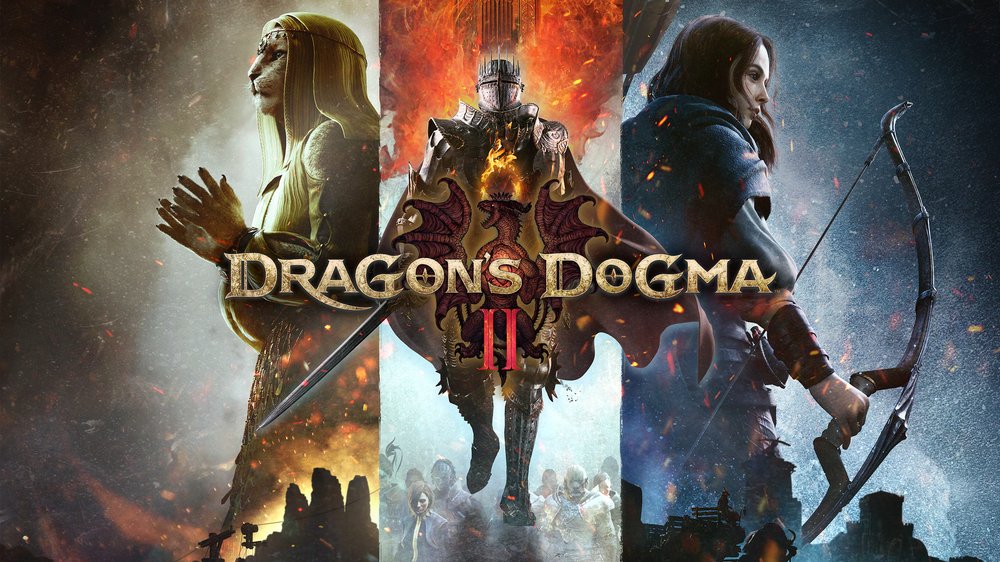
What a Realm, Huh?
Worth knowing the shape of this world before getting into what makes it distinct. Dragon's Dogma II is an action RPG set in a fantasy world with familiar tabletop-adjacent classes, built around aiding NPCs through side and main quests before eventually facing down the dragon at the center of it all. It's the sequel to Hideki Itsuno's original Dragon's Dogma — a game born from Capcom handing the Devil May Cry series over to Ninja Theory and, in the process, freeing Itsuno up to chase the western-style open-world RPG he actually wanted to build.
That original split its audience cleanly in two: some players loved its slow pace, its randomness, its exhausting-but-honest combat; others found the same qualities simply draining. What both camps agreed on, regardless of which side they landed on, was that the game's transportation was genuinely bad. Itsuno mostly held his ground on his design philosophy anyway. The good news for newcomers: the two games don't share a universe, so nothing from twelve years ago is required reading — though the sequel does lean on a broadly similar fantasy framework.
Calling it a "sequel" undersells how much of a remake it also is. The opening makes that clear immediately: a generic-but-effective fantasy score, a slowly brightening screen, a lovely vista. The dragon that appears is ancient and cruel, surfacing once a year to terrorize the powerless and choose a warrior — whose heart it then removes and swallows, transforming them into an "Arisen." Stripped of their humanity, the Arisen sets out to hunt the dragon down and reclaim what was taken. Every Arisen repeats this same karmic loop, dragon and chosen warrior locked in a cycle the world apparently needs to keep functioning. It's an intriguing premise that never becomes more than that — but the game's real strength was never going to be its plot. Its mechanics and combat carry the weight instead, and they don't need the story's help to do it.
Classes, Pawns, and a System With Real Range
You start with four classes — fighter, archer, mage, thief — and unlock more as you progress, ten in total between basic and advanced tiers, freely swappable. The variety holds up: Thief is one of the strongest DPS options in the game, capable of auto-dodging certain attacks with its daggers, while Fighter leans on shields to tank damage others simply can't absorb. Archers dodge differently — kiting from behind their own pawns while firing at speed — and further up the tree, Magick Archers bend arrows around obstacles to strike from angles enemies don't expect, while Mystic Spearhands play trickster, leaning on misdirection as much as damage. Leveling doesn't just make you stronger in the abstract; it hands you new abilities that turn fights that once required real skill into one-shot kills, which does a genuinely good job of making progress feel earned rather than assumed.
One decision cuts the other way: several classes from the original game got split apart here rather than carried over whole — Thief and Archer, for instance, no longer combine the way the old Strider class let them. The game doesn't want a single character built to fight equally well at range and up close, and there's no longer a hybrid class to make that possible, even with free class-switching on the table. Some longtime players read this as a real loss.
Pawns soften the edges of a single-player game that still wants group combat. You recruit and command them with a handful of simple orders, gear them up yourself, and lean on them for both fighting and navigation — including pointing out nearby points of interest. Don't get attached, though: pawns die easily, don't level up on their own, and eventually need replacing. You can recruit a same-level pawn for free, or pay in pawn-specific currency for something stronger. Character creation is generous enough that you can build almost anyone — there are tutorials online for recreating actors and pop-culture figures down to the detail. The one real frustration: when a pawn falls in battle, their dropped inventory is often maddeningly hard to actually locate afterward.
Weight, and the Cost of Feeling Real
The game's realism is most convincing in combat. Enemies have actual weight — you feel it in every clash — and the animation work, paired with genuinely impressive physics, produces landslides, small tsunamis, explosions that feel like they belong in the world rather than bolted onto it. Nearly everything in the environment is interactive: you can move pawns, shift objects, and generally push against the world rather than just walk through it. That physicality extends past combat, too — there's a real sense of exhaustion after a hard-won fight, the kind that makes you want to rest rather than immediately move on, and the same weighty feeling carries over into moments like scaling a monster mid-fight.
The same realism shapes how quests are handed to you. Instead of a marker and an objective line, the game gives you ambiguous direction you have to work out yourself, asking NPCs or your pawns, occasionally stumbling into a clever workaround or a hidden path along the way. Curiosity is genuinely rewarded here. But the same design has a real cost: some players missed that certain quests were quietly timed, and with only one save slot that autosaves constantly, there's no falling back on an earlier file to undo a mistake you didn't know you were making. Whatever you decide, intentionally or not, sticks — which keeps the experience honest, even when it's frustrating.
The Trouble With Travel
Transportation is still the weak point it always was. True to the setting, there isn't much of it — most travel happens on foot, or through rare teleport stones. The carriage from the first game hasn't returned, which stings given how badly the original needed a fix here; when a similar option does show up, it's slow enough to actively work against the game's own timed quests, and it isn't safe from random encounters either. Getting ambushed while escorting a carriage is a genuinely cool idea on paper — tense, appropriately risky — but in practice it can also slow the carriage further or destroy it outright, costing you both time and money. It's one more example of the game's commitment to realism creating a real problem alongside the interesting one.
To Conclude
Dragon's Dogma II ships with real strengths and some genuinely unusual design choices, but its ambitions come with friction attached at nearly every turn. Whether that trade-off is worth it depends entirely on the player — this was clearly built for a specific kind of experience, and it's just as clearly not trying to be for everyone. Go in knowing that, and you'll likely land exactly where the game wants you.