MMORPGs aren't just entertainment — they're immersive, multidimensional realities where players work through narrative, social structure, and genuinely existential questions. To deconstruct one is to read its architecture, its narrative, and its mechanics through an ontological and metaphysical lens: to ask what it's actually claiming about being. This piece takes World of Warcraft as its case study.
The Virtual World as Ontological Construct
MMORPGs are designed worlds, built from rules and lore. World of Warcraft's landscape functions as a microcosm of being — reflecting and distorting the ontology of the world it's drawing from through its architecture, its streets, its wilderness: reality simulated and transfigured.
The instinct to define a virtual world in purely technical terms has its uses, but it also produces real confusion between technologies with comparable specifications — likely because a virtual world, like a smartphone, is really a symbiosis of different technologies rather than one clean category. Bell (2008) offers one definition of a virtual world, but it's not obvious that definition applies smoothly to an MMORPG, and others argue virtual worlds aren't games at all (Girvan, 2018). As Girvan puts it, there's an ongoing industry debate over whether MMORPGs should even be considered virtual worlds. What these genres actually do is fuse experience and technology into something player-oriented — inducing users into an alternate universe, an entirely new virtual world of its own.
Spatial Ontology
The geography of World of Warcraft carries layered meaning. Cities like Stormwind and Orgrimmar are centers of civilization — social contracts, hierarchies, hubs of trade and politics that mirror an orderly, structured human environment. Wilderness areas like Stranglethorn Vale or the Plaguelands represent the opposite: chaos, danger, the unknown. These spaces resonate with genuine metaphysical dualisms — order and chaos, being and becoming, self and other. A player's movement through them can be read as a kind of existential journey, a search for meaning within the bounds of Azeroth's own cosmology.
The line between contested and faction-controlled territory adds another layer entirely — a boundary that's ideological as much as physical, embodying the entrenched conflict between the Horde and the Alliance. The persistent low-grade war found in battlegrounds and world PvP echoes Hobbes's state of nature, where life is nasty, brutish, and short — forcing players into a constant negotiation between individual agency and collective survival.
Time and Temporality
World of Warcraft departs from the static worlds of literature or film through its dynamic, temporal systems. Day-night cycles, seasonal events like the Feast of Winter Veil, and respawn mechanics all point toward a cyclical conception of time — something close to Nietzsche's eternal recurrence (Nietzsche, 1882/1974). Players are bound by that temporality, but also freed by it: the game's loops generate near-infinite possible action within a genuinely finite structure. That the world keeps running even when no one's logged in adds another layer still — evidence that this is a world in itself, not merely a space that exists only when observed.
The passage of time in WoW has become almost a moot question, given how often successive expansions reshape the timeline in ways that don't always cohere. The Cataclysm expansion went as far as physically reshaping Azeroth's geography — a blunt reflection of the fragility of existence and the inevitability of change. Players are left to reconcile their memory of a world that no longer exists with the one now standing in its place: nostalgia and adaptation, playing out as game design.
The Avatar as Extended Self
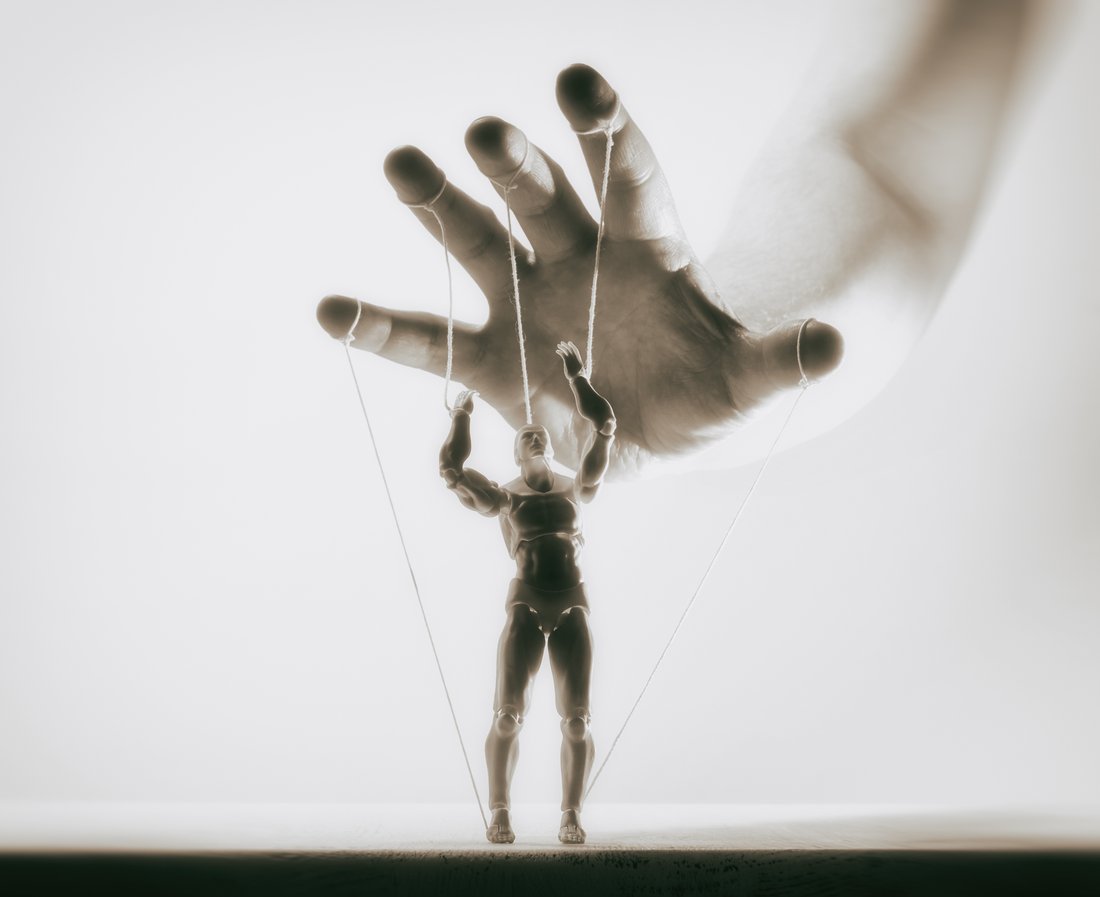
In MMORPGs, the avatar is both an extension of the player's identity and a distortion of it. Creating and controlling one raises real questions about selfhood — and the avatar the player builds turns out to be a genuinely useful subject for puppetry theory, which has its own competing definitions of what "puppetry" even means. Understanding it here depends on what's meant by metaphor: a figurative expression of similarity or difference, where a direct, non-literal identity is drawn between one thing and another (Myers & Simms, 1989). That identity, drawn between two things, creates a resonance between them — and becomes a kind of loop binding self to avatar, player to world, non-literally but persistently.
Identity and Dualism
Cartesian dualism (Descartes, 1641/1996) finds a real expression in the player-avatar relationship — mind and body split across player and avatar. But the division is never clean: the avatar becomes a vehicle for the player's own volition, desire, and ethical choices. A night elf or an orc, a warrior or a mage — each choice lets a player either project an idealized version of themselves, or experience what it might feel like to align with someone entirely different. These choices carry real moral and aesthetic weight, communicating a player's values, imagination, and desire.
Beyond personal identity, the avatar's faction — Horde or Alliance — represents something collective. That single decision shapes not just the narrative available to a player, but how they're treated by others: a real sense of belonging, or of otherness. Few games this popular manage to be this evocative of real-world division while also asking players to actually think about what belonging means.
Embodiment and Disembodiment
Avatars give players a sense of embodiment in the game world, while simultaneously underlining the player's own disembodiment from it — a paradox that opens onto real existentialist concerns about alienation. In combat and dialogue, choices like siding with or opposing Sylvanas during the Battle for Azeroth reveal something about the player's own values, blurring the line between player and character further.
Death and rebirth mechanics raise their own questions about mortality and transcendence. Death in WoW is only ever temporary — where real death is an ending, in-game death is simultaneously irrelevant and unavoidable. Crossing into the ghostly plane to recover one's body becomes a liminal space where players confront both fragility and resilience, however briefly.
The Hero's Journey, Reimagined
World of Warcraft borrows the hero's journey archetype, then works directly against it through player agency. Campbell's (1949/2008) model breaks the journey into fixed stages — the Call to Adventure, Threshold Crossing, Return with the Elixir. WoW disrupts that fixed, linear model by letting the player shape who they become, breaking the sense that a character's fate is predetermined by the narrative.
In expansions like Legion, the player is elevated from generic adventurer to one of the most consequential figures in the wider story — wielding artifact weapons, leading entire orders. That ascension blurs the line between personal significance and a collective narrative that, in theory, isn't supposed to revolve around any single player.
Ethical and Moral Dilemmas
Quests regularly force genuine ethical decisions. Being guided into becoming the Death Knight of Arthas, before eventually having agency handed back during Wrath of the Lich King, is a clean example — the kind of scenario that raises real existentialist questions about the burden of choice and the weight of consequence. Those consequences ripple outward across the game world, underlining just how interconnected its version of being actually is.
That same moral complexity extends into faction-specific storytelling. The Horde's struggle between honor and survival, set against the Alliance's pursuit of justice and order, invites players to question the very subjectivity of good and evil. The War of the Thorns, culminating in the Burning of Teldrassil, stages vengeance, guilt, and redemption without offering a clean answer to any of them.
Social Contracts and Power
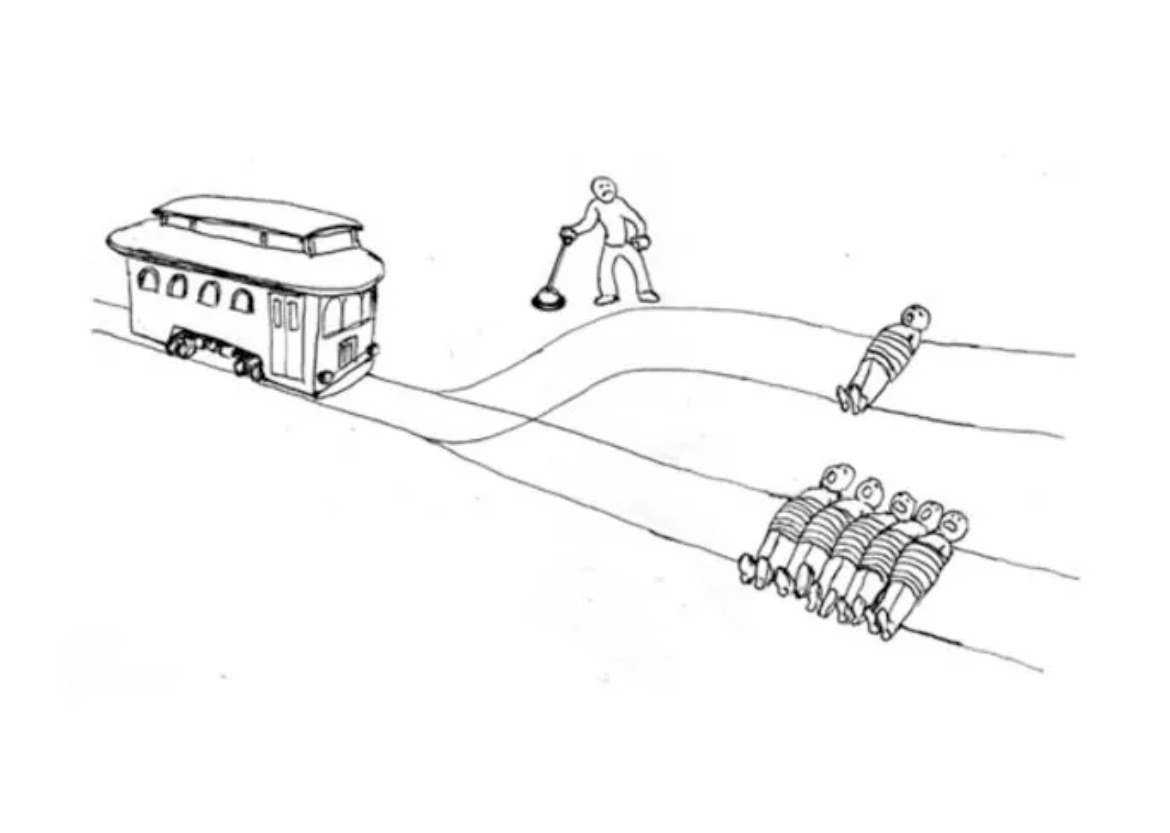
Guild hierarchies resemble Rousseau's social contract theory fairly directly — players give up certain freedoms in exchange for the benefits of collective effort. Raiding guilds in particular demand real discipline around schedules and roles in order to take down a shared target, whether that's Ragnaros or N'zoth.
World events — invasions, world bosses — reinforce a more temporary version of that same collectivism, letting players cooperate in ways that momentarily dissolve faction and guild politics entirely. These moments briefly suspend the game's usual social structures, revealing just how contingent those community ties actually are.
Emergence and the Virtual Economy
Player behavior regularly exceeds what the game's design actually anticipated — cooperative problem-solving, or large-scale unscripted conflict like the Southshore-Tarren Mill skirmishes from WoW's earliest years. That kind of emergence gestures toward a real question about collective intelligence: the ontology of groups, and where individual agency ends and collective agency begins.
The game's economy mirrors real-world markets, but with different metaphysical stakes. Crafting, trading, and collecting virtual goods raise real questions about value, labor, and desire — made stranger by the fact that in-game currency can be converted directly into subscription time, letting players fund their own access to the game through the game itself.
That labor is worth reading through a Marxist lens. The work that goes into quests or crafted items generates value inside the game's economy, but it's the developers who extract that value — through subscriptions, through the WoW Token — echoing real fears about exploitation and alienation under capitalism more broadly. The auction house works as a small model of capitalism in miniature: supply and demand set prices, and wealth becomes a status symbol as much as a resource. The pursuit of gold and rare items reflects a very ordinary human desire for material wealth, even inside a world that isn't material at all.
Boss Fights as Ritual
Fighting the Lich King or Illidan Stormrage plays out like ritual — choreography, symbolism, and collective engagement all at once. Read through existentialist and phenomenological philosophy, these fights become confrontations with the Other. The cinematic sequences built around them only raise the stakes further, turning encounter into emotional centerpiece. It's a genuinely Kantian sublime: that collision of the infinite and the finite, staged as a boss fight.
Exploration and the Infinite
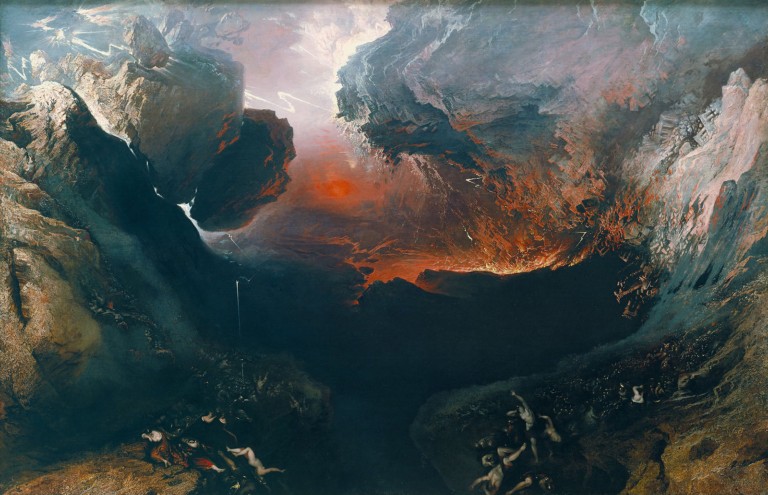
Azeroth produces a feeling of near-infinite possibility, even where its actual boundaries are fixed. The wide expanses of Northrend and the sparse, alien stretches of Outland push players to reconcile the virtual world's real limits with the limitless horizons of their own imagination — a paradox that maps neatly onto older metaphysical questions about order and the un-ordered. Flying mounts changed this further, giving exploration a new sightline: movement not just through a space but across it, reframing what progress even means inside a world this size.
Conclusion
Taking a deconstructive approach to World of Warcraft reveals a game genuinely full of metaphysical and ontological categories — from the construction of its universe down to the smallest interactions between players. MMORPGs like WoW aren't just a major part of modern entertainment; they're a legitimate domain for philosophical inquiry, quietly asking players to examine the nature of reality, identity, and existence itself, one raid at a time.