What Is Dead Cells?
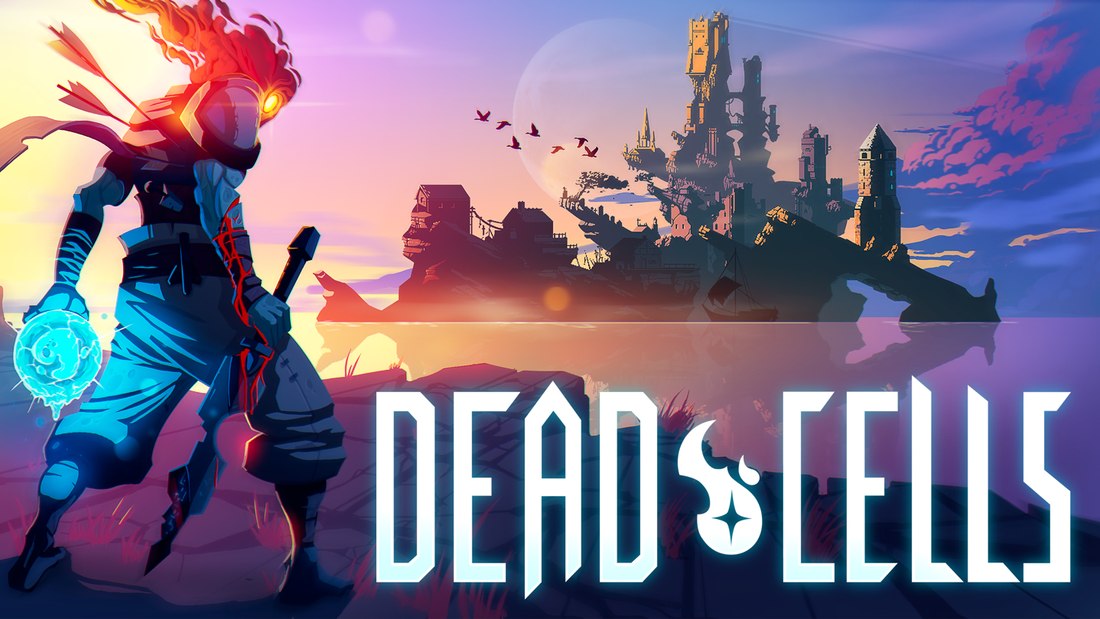
Dead Cells is a 2018 roguelite-metroidvania developed and published by Motion Twin. The player takes the role of an amorphous creature called the Prisoner, who must fight their way out of a diseased island to slay the island's King. Weapons, treasure, and tools are gained through exploration of procedurally generated levels. The game features a permadeath system — dying costs the player all items and abilities — while a currency called Cells, collected from defeated enemies, allows for permanent upgrades.
Genre Definitions
Roguelike: a subgenre of role-playing computer games traditionally characterized by a dungeon crawl through procedurally generated levels, turn-based gameplay, grid-based movement, and permanent death of the player character.
Metroidvania: a subgenre of action-adventure games and platformers focused on guided non-linearity and utility-gated exploration and progression. The term is a portmanteau of Metroid and Castlevania.
The Roguelike-Metroidvania structure of the game — RogueVania for short, as the company's own marketing choice — includes crucial and essential parts of both genres, rearranged in small ways (not 100% random levels, for instance) and mixed together to create Dead Cells.
Related Games
When we talk about Roguelikes and Roguelites, we're referring to a category of games with roots in the classic game Rogue and in Rogue Legacy. They borrow key elements from it — the thrill of exploring dungeons, the constant threat of permanent character death, and levels generated procedurally, offering a fresh experience every time you play.
A critical influence on the creation of Dead Cells is Castlevania. The development team's passion for Castlevania shines through in the final build, and their efforts have earned them praise for successfully bringing back the Castlevania feeling to the industry. In fact, they went as far as branding Dead Cells as "Rogue-Vania," clearly signalling Castlevania's impact on the game.
Early in development, Dead Cells had a different vision. When it was more of a tower defense concept, the developers envisioned a character like the Engineer from Team Fortress — proficient in using and controlling turrets. Although Dead Cells underwent significant changes through its evolution, the concept of a character able to use turrets stayed.
The development team also drew inspiration from games they loved to play, such as Dark Souls, Rogue Legacy, The Binding of Isaac, and Diablo 3. The influence of The Binding of Isaac is particularly obvious, as it played a significant role in shaping the game's weapon system and its game-changing elements.
The level design aimed for a sweet spot between total randomness and complete predictability. To get there, the team took notes from games like Left 4 Dead, Spelunky, and FTL: Faster Than Light — studying their design philosophies to build levels with the dynamic, yet structured, experience they had in mind.
Team Goals
Their goals were set by their motivations throughout the process. In the early stages, they wanted to make a sequel to one of their beloved IPs, Die2Nite — Hordes. Their struggles along the way changed the team's goals for the game. In one meeting, a worker asked "How many of us want to do a tower defense game?" — the question was answered with no raised hands. They wanted to make something everyone on the team was actually passionate about.
Their final goal became a roguelike-metroidvania inspired by Castlevania — and it had to be embraced by everyone at the company for it to be developed with real passion.
Plot Concept
Dead Cells' plot was designed and shaped as the game's mechanics changed. The story was massive chaos, continuously shifting alongside those mechanical changes.
There's a paradox at its center: the player tries to learn about the ruined world's history and the reasons behind its ruination. The protagonist, Beheaded, is a mutated being that can change vessel bodies whenever its current one falls apart — Motion Twin's own solution for justifying one of the game's roguelike elements. At the end of the game, Beheaded clashes with a boss named the King, and after a couple of encounters, the player can take the King's body as a new vessel — becoming the King, and becoming a boss for another Beheaded, somewhere else in the loop.
The plot design is notably straightforward, but it still manages to provide a satisfying narrative experience. It shouldn't be forgotten that the developers' focus was never on storytelling or game writing. Motion Twin decided to keep it as simple as possible, while still holding onto logical, understandable key events and characters.
Drastic Changes of Dead Cells
What Was Their Plan Before Concept Changes?
Motion Twin is a studio established by former Kalisto Entertainment workers — after that studio's bankruptcy — who wanted to build a horizontal hierarchy in their new office. They'd already made a reasonable number of browser and mobile games, and Dead Cells (under its original name, Hordes Zero) was planned to be one of them, before the vital design changes that followed.
Production began as a planned follow-up to one of their previous browser games, Die2Nite — a point-and-click browser game — with two phases: "preparation" and "defense" against zombie hordes. The game's name at the time was Hordes Zero.

Their first plan for the sequel was to make it more interesting by combining the "fight" phase with a 2D strategy tower-defense mini-game, aiming for a better feel overall, since the fighting phase on its own wasn't very interactive.
The month development started, Motion Twin had already launched a beta on their own platform, Twinoid, to gather feedback and refine the game from actual player experience. Nevertheless, the tower-defense game wasn't able to succeed as designed, and underwent a metamorphosis that eventually led to the Dead Cells we know today.
What Went Wrong Before Concept Changes?
Exploration and tower-defense mechanics didn't get bright feedback. Players said those mechanics were boring and needed rework. Another vital problem: the multiplayer system wasn't as encouraging as the developers had thought. To face these problems, Motion Twin decided to cut parts of the game and rebuild a better tower-defense feel.
After the feedback, the studio cut the "Exploration" part entirely, since it felt unnecessary, and made the tower-defense experience the main focus. They also gave up Die2Nite's modern-era style in favor of a medieval one for the art direction.
These drastic changes were announced on Twinoid and on the Hordes Zero website through mysterious messages and teasing. The game's new style was shared over the following months to keep the hype alive.
Shortly after these teases, Motion Twin finally published Hordes Zero — leaving some gameplay choices open, like whether or not to defend a given area, and including a drop-in, drop-off multiplayer structure where players could play together or alone.

To hold attention at the game conferences they attended, they quickly removed the free-to-play aspect and multiplayer, since it was easier to show a single-player experience to visitors. They never truly gave up on multiplayer — they only wanted people's attention while showing the game off.
After their experience at Gamescom, they changed the game's name to Dead Cells, because almost no one could actually pronounce "Hordes Zero."
Under the renewed name, Dead Cells was still a multiplayer tower-defense game. With the new branding, Motion Twin ran an alpha test with 30 people — but the only genuinely fun part of the game turned out to be the moments when four players happened to be online at once. They needed an absolute solution.
The decision was made to wait for government funding, rebuild the entire backend, and turn Dead Cells into a full single-player experience — putting the game on hold until that funding arrived. A separate tension inside the studio didn't help: some workers wanted to make hardcore PC games, while most of the company's profit and marketing investment was going toward mobile. After brainstorming, the team finally landed on the same page, mentally and financially, around Dead Cells.
In a meeting, according to the developers, they finally agreed they wanted to make something everyone was genuinely passionate about — and that a tower-defense game wasn't it. For a while, their only real decision was to make a single-player game with actual passion behind it. With time running out for the company, and all these drastic changes behind them, Dead Cells might have been their saviour... or their dead end.
What Went Right After Concept Changes?
One of the workers was a huge Castlevania fan, and suggested making a game like it. After some brainstorming, the team decided to go with a fusion of Castlevania and roguelike design — and development on the real Dead Cells finally began.
In 2017, Dead Cells was published for beta testing once again. This time, the critiques were significantly more positive, and players gave far more constructive feedback. Most of it went toward fixing bugs and game-breaking issues, with only a handful of changes being genuinely drastic.
As a new blockbuster in the industry, Dead Cells received strong reviews and strong sales, becoming Motion Twin's greatest product to date. After that success, in 2019, Motion Twin spun off a new studio called Evil Empire, focused entirely on Dead Cells' continued development, while Motion Twin itself moved on to new games.
The Advantages of This Post-Mortem
As future game developers, it's genuinely difficult to give up on a game idea we love. But as Warren Spector has said — anyone who tells you ideas are irreplaceable, the most valuable thing in the world, is wrong, and shouldn't be believed. Motion Twin suffered physically, mentally, and financially during the development of Dead Cells' early concepts. They held onto that first idea like it was their child, and it's never an easy thing to kill your darlings. Eventually, they realized their first idea was never going to find success or hype the way they'd hoped — and that there was no real reason to keep making a tower-defense game with a team that didn't actually want to make one.
My own takeaway: it's mandatory to stay open-minded about when an idea needs to change, while still following whatever passion actually lives in the work.